
What Is Your Body’s “Default Setting”? Why the Rest of Your Week Matters
Oct 14, 2026You can have three great workouts each week and still be missing an important piece of the puzzle.
Think about what your body experiences over seven days. During your strength-training sessions, you're challenging your muscles with resistance, greater intensity, and purposeful movement. These workouts provide the stimulus your body needs to adapt, build strength, and maintain muscle.
But what happens during the hours between those workouts?
If the rest of your week doesn't support the progress you're working toward, you may be limiting the results you could otherwise achieve.
The reality is that your body doesn't respond only to your workouts. It responds to the total amount and type of activity it experiences throughout the week.
That's what we call your body's "default setting."
Not All Movement Creates the Same Results
Being busy and being physically active aren't necessarily the same thing.
Working, driving, household projects, gardening, and everyday chores all contribute to your daily routine. Some provide valuable physical activity, while others require very little physical effort.
But they don't all create the same physiological stimulus.
Resistance training challenges your muscles to become stronger. Moderate-intensity cardiovascular activity challenges your heart, lungs, and endurance. Light movement helps reduce prolonged sedentary time and contributes to overall daily activity.
Each serves a purpose, but no single type of movement accomplishes everything.
The question isn't simply whether you're moving. It's whether the combination of activities throughout your week supports the health, strength, stamina, and physical capabilities you want to maintain.
The Other 165 Hours: Where Your Activity Adds Up
At NorthStar Fitness, our structured resistance-training sessions provide the foundation for building and maintaining muscle through purposeful, progressive training.
But even three consistent workouts represent only a small portion of your week.
That's why it's important to look beyond the studio.
Current physical activity guidelines recommend that adults accumulate at least 150 minutes of moderate-intensity aerobic activity each week, alongside muscle-strengthening activities.
That's approximately 30 minutes, five days per week.
Moderate intensity doesn't mean exhausting yourself. It means moving at a pace that noticeably elevates your heart rate and breathing while still allowing you to carry on a conversation.
Activities might include:
-
Brisk walking around your neighborhood
-
Riding a bicycle
-
Swimming
-
Walking the golf course
-
Hiking or other outdoor recreation
-
Active gardening or yard work that raises your heart rate
The important distinction is intensity and consistency. A leisurely stroll and a brisk walk may both be beneficial, but they don't necessarily provide the same cardiovascular challenge.
Your goal isn't to make every day a hard workout. It's to accumulate enough purposeful movement that being active becomes your body's normal setting.
How the NorthStar System Helps Build an Active Lifestyle
Our approach to lifetime health recognizes that meaningful progress requires more than simply completing workouts.
Several components of the NorthStar system work together to support this principle.
Permanent Schedule System: Creating the Foundation
Consistency is essential for building and maintaining muscle.
Your regularly scheduled resistance-training sessions provide the structured stimulus your muscles need to continue adapting over time.
By making these sessions a consistent part of your routine, you establish a dependable foundation for your overall activity.
Functional Movement Expander: Taking Strength Beyond the Studio
Building muscle is important, but the bigger objective is using that strength to live an active, capable life.
Our Functional Movement Expander connects the strength developed through training with broader physical movement and everyday capabilities.
Walking, hiking, golfing, biking, and other activities become opportunities to put your physical capacity to use while contributing to your total weekly activity.
The goal isn't simply to become stronger during an exercise. It's to become more capable in everyday life.
Goal Navigator: Connecting Daily Habits to Long-Term Results
Your desired outcome should guide what you do both inside and outside the studio.
Through Goal Navigator and ongoing coaching accountability, we help connect your goals with the habits and activities that support them.
If your goal is improved endurance, greater energy, better body composition, or maintaining your physical independence, it's important to evaluate whether your overall weekly routine aligns with that objective.
Sometimes the greatest opportunity for improvement isn't changing your workouts. It's making one intentional adjustment to the days between them.
Build the Peaks. Raise the Whole Week.
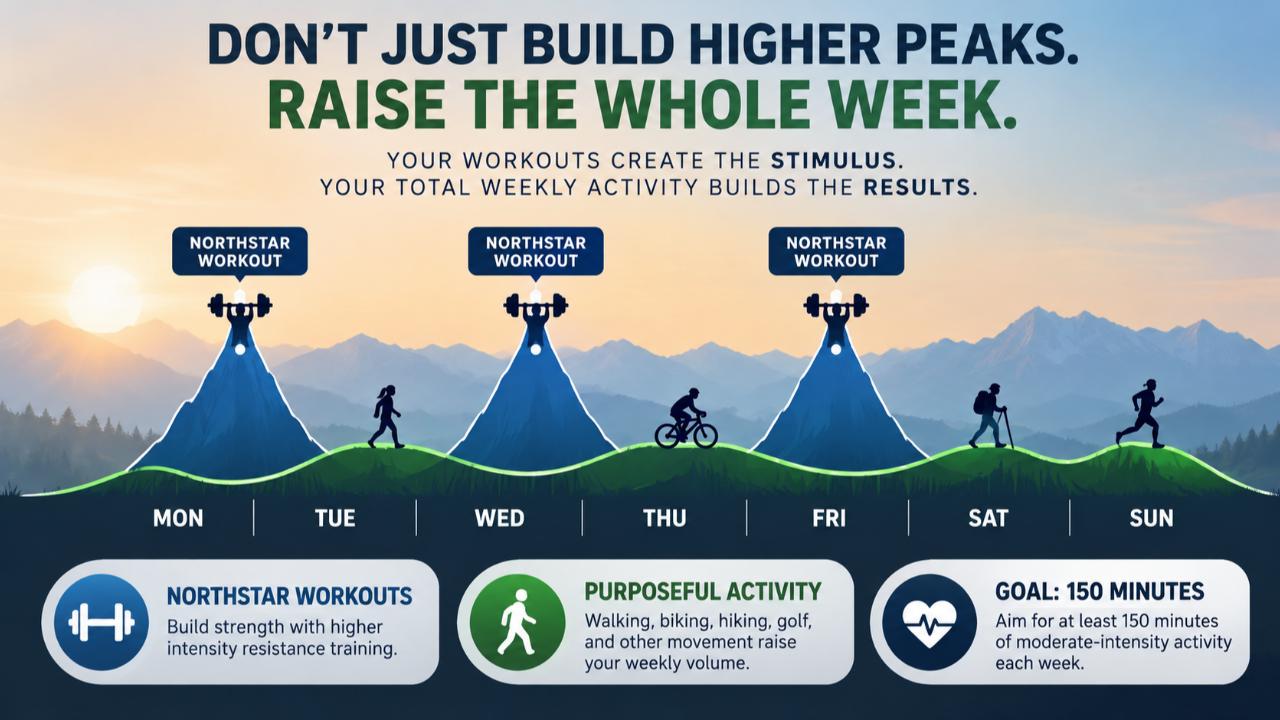
Think of your NorthStar workouts as the peaks of your week. They provide concentrated periods of resistance and physical challenge.
The opportunity is to raise your overall activity level between those peaks.
This doesn't mean training intensely seven days per week. Recovery remains important, and different activities place different demands on your body.
Instead, consider how purposeful walking, recreational activity, and other moderate-intensity movement can complement your strength training.
The goal isn't to spend more of your life exercising. It's to build the strength, stamina, and energy to spend more of your life doing what you love.
Whether that's golfing, traveling, hiking, keeping up with your grandchildren, or simply feeling more capable throughout your day, the activities you consistently choose help support those abilities over time.
Put Your Body's “Default Setting” to the Test
This week, look at the days between your scheduled workouts and ask yourself:
"What is my body being asked to adapt to most often?"
Are you accumulating enough purposeful activity to support your goals, or is there an opportunity to raise your weekly volume?
Start with one practical change.
Consider adding a 30-minute brisk walk on non-NorthStar days, planning a bike ride, or finding an enjoyable activity that elevates your heart rate.
If you have an upcoming vacation or busy schedule, work with your coach to plan your training sessions around it and identify ways to stay active while you're away.
You don't need to overhaul your entire lifestyle overnight. Consistently repeating one meaningful improvement can help establish a more active routine.
Your workouts create the stimulus. Your total weekly activity helps determine how far you can take it.
And ultimately, lasting health isn't just about what your body can accomplish during a workout. It's about what your body remains capable of doing for a lifetime.
You've probably tried before. You've worked hard. But if you're not seeing results, it's not your fault - It might just be the wrong plan for your body and stage in life.
Take the quiz to discover yours and get a customized blueprint that actually works for you.